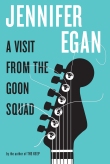
We've long been fans of her novels and short fiction, and are especially pleased to see a true musical fiction take such a prestigious award. Here's her personal website to see what else she's up to.


I was reading one of those great Continuum 33 1/3 CD-size books on great LPs, this one on Van Dyke Parks’s Song Cycle, and I was struck by the opening: “Anyone unlucky enough not to have been aged between 14 and 30 during 1966-67 will never know the excitement of those years in popular culture. A sunny optimism permeated everything and possibilities seemed limitless.”
The quote is actually from Ian MacDonald’s extraordinary Beatles book, Revolution in the Head, but when I read it, it made me see why in my own novels I find them often set in years that overlap 1966-67, witness Meet the Annas, Look at Flower, and the forthcoming Surf Music Rules.

Surf Music Rules is the reason I was checking out the Van Dyke Parks book. My novel is an epic tale of the L.A. music scene from th
e surf music days of 1961–2 to 1968, when my hero, Nick Berry, dies on the beach in Mexico from a heroin overdose. The novel’s completed; publication should be announced soon.

In his life, Nick Berry passes through that magical time of ’66–67, and I realized that one of the reasons I write my musical fictions is to capture that magic and make it present and rich for all readers, especially those who weren’t there. I was myself 15 and 16 then, and as I recall, possibilities did seem limitless … as possibilities always should.

I haven't updated the blog recently since I've 1) been working hard on draft No. 5 of a new novel, Surf Music Rules (excerpts coming soon on the Playlist) and 2) all of us here at Coral Press have been working hard upgrading the website.
But ... a great night a few weeks back, worth posting about. Jerry Leiber and Mike Stoller appeared at a nearby Barnes and Noble, and there was a large turnout to meet them and get copies of their autobiography, Hound Dog, signed. The two songwriters (Hound Dog, of course, plus most of the Coasters' hits, a number of other strong Elvis tunes, even Peggy Lee's devastating Is That All There Is) told funny, sneaky, charming stories and answered questions for more than an hour—and then the long line to get books signed snaked its way through the bookstore's reading room.
The reason to talk about Leiber and Stoller in the Coral Press blog is that, as much as any other songwriters, they've incorporated stories into their songs—indeed, many of the songs could be short stories or playlets (and, no surprise, the theatrical revue comprised of their songs, Smokey Joe's Cafe, was the longest running musical revue in Broadway history—though, ironically, it had no overall story).
 Think of the great Coasters’ hit Yakkety-Yak (the Leiber-Stoller song that became the title of their Big Band LP, with the picture of the derby-topped songwriters gamboling with an actual yak). The way the song came about, according to Hound Dog: Jerry was boiling water in the kitchen while Mike was banging out piano chords. Jerry heard a particular rhythm, presumably looked down, saw a trash barrel, and shouted out, “Take out the papers and the trash!” Like that, Mike cried, “Or you don’t get no spending cash!” Ten minutes later the song was born.
What’s impressive here, apart from the speed of composition and the way they seemed to read each others’ minds, is how from the very start character and plot are created: the kid homebound at summer, getting grief from his parents, kept from doing what he wants to do (rock and rolling with his hoodlum friends)—essentially, how the situation is immediately a proposition, an exchange, a drama over who has power and control. All this in less than three glorious minutes of wax time.
And you see it! Joseph Conrad tells us in fiction above all: Make us see! Leiber and Stoller immediately put us in that household (we see the papers, the trash), burdened with our own tasks, listening to that voice (close to Peanuts’ TV adults squawking godlike off-camera?) control our lives, setting up blocks to our pleasure, always making deals, always trying to steal our rock and roll joy.
Genius.

 Both books are highly recommended—Laura’s paintings capture, in their forceful colors, deep-rooted innocence, and devil-may-care whimsy, much of the essential mystery that makes early rock and country music so powerful; and if you hie yourself to the Mystery Spot, Laura will autograph each book personally for you.
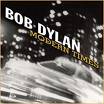 But what I’d like to write about here is the new Dylan album, Modern Times. The central idea to Coral Press is that novels can be written about music, but also that enduring literature can take the form of great music, and perhaps no one exemplifies that better than Bob Dylan. (In our less restrained moments we’ve been known to call Dylan our own Shakespeare—or at least our own Lord Byron.)

