Wednesday, April 13, 2011

Wonderful Match of Music and Books

How could we at Coral Press not love this current trend to turn classic rock albums into vintage paperback covers? Here's our favorite:


But there are many more. There's a whole selection here,  and the guy evidently is going to be selling packs of cards of these. Highly recommended.

We at Coral Press love to play around with the imagery for our books, and of course our latest novel, Look at Flower, was inspired by an original Fillmore poster by Bonnie MacLean; and we have an issue of our favorite '60s teen mag devoted to "Flower" up on Flower's site right here. Here's a pic of that:


Oh, and one more great mock cover:


Wednesday, February 9, 2011


I was reading one of those great Continuum 33 1/3 CD-size books on great LPs, this one on Van Dyke Parks’s Song Cycle, and I was struck by the opening: “Anyone unlucky enough not to have been aged between 14 and 30 during 1966-67 will never know the excitement of those years in popular culture. A sunny optimism permeated everything and possibilities seemed limitless.”

The quote is actually from Ian MacDonald’s extraordinary Beatles book, Revolution in the Head, but when I read it, it made me see why in my own novels I find them often set in years that overlap 1966-67, witness Meet the Annas, Look at Flower, and the forthcoming Surf Music Rules.

Surf Music Rules is the reason I was checking out the Van Dyke Parks book. My novel is an epic tale of the L.A. music scene from th

e surf music days of 1961–2 to 1968, when my hero, Nick Berry, dies on the beach in Mexico from a heroin overdose. The novel’s completed; publication should be announced soon.

In his life, Nick Berry passes through that magical time of ’66–67, and I realized that one of the reasons I write my musical fictions is to capture that magic and make it present and rich for all readers, especially those who weren’t there. I was myself 15 and 16 then, and as I recall, possibilities did seem limitless … as possibilities always should.

Thursday, July 23, 2009

Leiber and Stoller signing autobiography

I haven't updated the blog recently since I've 1) been working hard on draft No. 5 of a new novel, Surf Music Rules (excerpts coming soon on the Playlist) and 2) all of us here at Coral Press have been working hard upgrading the website.

But ... a great night a few weeks back, worth posting about. Jerry Leiber and Mike Stoller appeared at a nearby Barnes and Noble, and there was a large turnout to meet them and get copies of their autobiography, Hound Dog, signed. The two songwriters (Hound Dog, of course, plus most of the Coasters' hits, a number of other strong Elvis tunes, even Peggy Lee's devastating Is That All There Is) told funny, sneaky, charming stories and answered questions for more than an hour—and then the long line to get books signed snaked its way through the bookstore's reading room.

The reason to talk about Leiber and Stoller in the Coral Press blog is that, as much as any other songwriters, they've incorporated stories into their songs—indeed, many of the songs could be short stories or playlets (and, no surprise, the theatrical revue comprised of their songs, Smokey Joe's Cafe, was the longest running musical revue in Broadway history—though, ironically, it had no overall story).

Think of the great Coasters’ hit Yakkety-Yak (the Leiber-Stoller song that became the title of their Big Band LP, with the picture of the derby-topped songwriters gamboling with an actual yak). The way the song came about, according to Hound Dog: Jerry was boiling water in the kitchen while Mike was banging out piano chords. Jerry heard a particular rhythm, presumably looked down, saw a trash barrel, and shouted out, “Take out the papers and the trash!” Like that, Mike cried, “Or you don’t get no spending cash!” Ten minutes later the song was born.

What’s impressive here, apart from the speed of composition and the way they seemed to read each others’ minds, is how from the very start character and plot are created: the kid homebound at summer, getting grief from his parents, kept from doing what he wants to do (rock and rolling with his hoodlum friends)—essentially, how the situation is immediately a proposition, an exchange, a drama over who has power and control. All this in less than three glorious minutes of wax time.

And you see it! Joseph Conrad tells us in fiction above all: Make us see! Leiber and Stoller immediately put us in that household (we see the papers, the trash), burdened with our own tasks, listening to that voice (close to Peanuts’ TV adults squawking godlike off-camera?) control our lives, setting up blocks to our pleasure, always making deals, always trying to steal our rock and roll joy.

Genius.

Wednesday, March 28, 2007

LA Trip


Just back from a week in Los Angeles, among other things researching a new musical novel, Surf Music Rules.

Surf Music Rules is the story of Nick Berry, founder of the L.A. surf music band The Revelators, and later the folk-rock group the Radiant Berries. The novel will tell his full tale, from days of innocence in the early '60s till a tragic end at the end of that decade.

A highpoint of my trip was a tour of Sunset Sound Recorders, where in the day the first Doors LPs and the Beach Boys' Pet Sounds were recorded. Sunset Sound was kind of enough to let me poke around, and here's a photo of me at their mixing board.

Tuesday, November 28, 2006

Laura Levine

Maybe we here at Coral Press have synesthesia—the mental state that confuses senses, allowing you to hear colors, see music, etc.—because not only does Coral Press love music as music, we love music as fiction ... as story.
But we also love the music as art, and to that end we spent a fun afternoon last weekend in Phoenicia, N. Y. After downing the great pancakes at Sweet Sue’s on Main Street, we crossed the macadam and ended up at the Mystery Spot—truly one of upstate New York’s great finds.

The Mystery Spot is a gallimaufry of inherently luminous cast-offs owned and operated by Laura Levine, who does striking outsider art–like paintings of early rock figures and venerable country artists. These paintings have been published, along with informative words from Holly George-Warren, in two terrific books: Shake, Rattle & Roll and Honky-Tonk Heroes and Hillbilly Angels.

Both books are highly recommended—Laura’s paintings capture, in their forceful colors, deep-rooted innocence, and devil-may-care whimsy, much of the essential mystery that makes early rock and country music so powerful; and if you hie yourself to the Mystery Spot, Laura will autograph each book personally for you.

We recommend you check out Laura Levine's website and support not simply musical fiction but also musical art.

Saturday, September 30, 2006

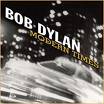
Bob Dylan's Modern Times

Sorry for not posting anything lately. We’ve been gearing up to put out a new Coral Press novel, Meet the Annas by Robert Dunn, the story of a ’60s girl group, as well as a novel about a mid-’70s cover band on the cusp of the Punk Era called Getting in Tune, by Roger Trott. (More info and publication dates on both books soon.)

We also haven’t come upon any new musical novels lately, though we did recently read and love Zadie Smith’s On Beauty and also Cormac McCarthy’s No Country for Old Men.

But what I’d like to write about here is the new Dylan album, Modern Times. The central idea to Coral Press is that novels can be written about music, but also that enduring literature can take the form of great music, and perhaps no one exemplifies that better than Bob Dylan. (In our less restrained moments we’ve been known to call Dylan our own Shakespeare—or at least our own Lord Byron.)

And we’re crazy about Modern Times; think it’s the Bobster’s best record since Blood on the Tracks. After the triumph of Chronicles—far and away the best book any rock figure has written or ever will write as an autobiography—we’re inclined to trust Dylan on all matters, and so even when a line or conceit on Modern Times might appear slapdash, we’re happy to look for connection; and connections abound. The whole record seems, especially during a 4 a.m. insomnia-drenched headphone listening to the album, to connect in every possible way: not only from song to song, line to line, but also as far back in the past as possible, and yet to the daily newspapers or newsblogs that riddle our consciousnesses.

The line that we come back to is: “I wanna be with you in paradise /And it seems so unfair / I can't go to paradise no more / I killed a man back there” with its wit, surprise, hint of the Old Testament yet and touchstone to contemporary religious extremism. Oh, and the line about playing in a cowboy band always brings a chuckle. And ... if the whole album is no more than a shout-out to Alicia Keyes, and all that that implies -- well, that’s kinda great, too.

But the reason we’re talking about Modern Times here is that it’s a piece of music that does what great literature does: Makes your head explode. You come away from a listen to the record as you leave a good book, full of rich ideas you almost can make sense of, a feeling of world-shaking meaning almost grasped, a plethora of characters with their quirky charms, and overall, the vivid delights of being guided by the hand of a true visionary artist.

Oh, and not often commented on: The record is beautifully produced (bravo, Jack Frost, whoever you are); lusciously played; and masterfully sung. There’s as much meaning and richness in Dylan’s voice and phrasing as in Sinatra at his wisest and most experienced. Dylan hardly needs us to say that he's a genius; but of course he is, and we feel lucky to be alive when he is.

Saturday, June 17, 2006

Leonard Cohen's vision meshes with CP

Just saw a screening of the new movie devoted to Leonard Cohen: I’m Your Man (opening on June 21). The flick is in the main a concert of Cohen songs done by (mostly) extended members of the McGarrigle/Wainwright family -- songs done very nicely, for the most part -- along with teasing rather than revealing interviews with Mr. Cohen and glimpses of old photos and home movies of him.

What’s great about the film is that it’s an hour and a half revel in the music of Leonard Cohen a true testament to his genius. (Personally, I’d count Suzanne and Hallelujah as the most transporting of his tunes played; I kind of missed Bird on a Wire, though -- thought that final line, “I have tried in my way to be free,” would have been the perfect ending.

What intrigues Coral Press about Cohen and his film is how he has tried in his own way some of what we’re here to do: To blend written literature with music and song to create a new literature. Of course, Cohen did it differently from us. He wrote a novel first (Beautiful Losers), then poetry, and then he set his poem/lyrics to song. I remember when I bought his first LP when it first came out that it seemed odd to have a serious poet trifle with pop music (we were still getting around the notion that a song such as Dylan’s Like a Rolling Stone could appear in the top 10); now, of course, it seems that Cohen’s songs will endure and win fans far longer than many of his contemporary poets.

We’ve often said that the purpose of Coral Press is to hit a unique nexus of music and literature, and though we publish novels about music, we wouldn’t exist if writers such as Dylan, Cohen, Paul Simon, etc. hadn’t shown us that true literature could turn up in the structure of a Top 40 song. For me, it’s a kind of miracle that crappy rock ’n’ roll has enduring power; and it’s a joy that, as we hurtle into our new century, more and more writers are writing on the ways rock ’n’ roll, both mindless and bountifully mindful, can be great art. And so we here at Coral Press hope to make it all take another turn: To find stories in music that are timeless and great, and make literature out of them.

A line might run Serious Young Novelist writes novel (Cohen; Richard Farina); Serious Young Novelist explores similar or greater themes in song; songs turn out to bear greater brilliance, in turn inspiring rock songs that have the power of literature; and then, going full circle, inspiring novels that hope to capture great music and great stories in prose. Or something like that.

I’d love to read further thoughts on how song and literature have come/can come together. Please post here.